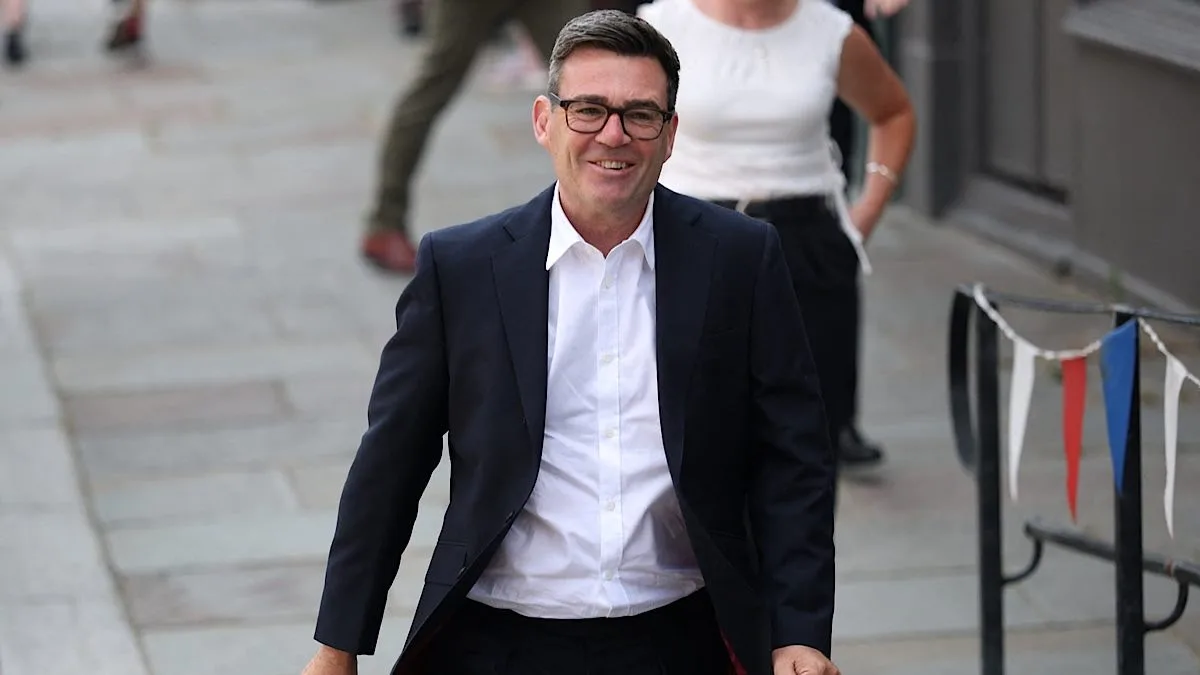
New Labour leader Andy Burnham has entered Downing Street promising something larger than a change of leadership. Britain’s seventh Prime Minister since 2016 wants his arrival to mark a break with the instability that has made political turnover almost routine. His challenge is to prove that replacing Keir Starmer can change the direction of government without producing yet another disruptive reinvention.
The early signals are deliberately ambitious. The new Prime Minister has put the cost of living, rough sleeping, council housing and youth opportunity at the centre of his domestic programme, while promising a 10-year plan for the country. More significantly, he speaks of returning essential services to public control and shifting power away from Westminster. These ideas suggest a more interventionist Labour government, with the state expected not merely to regulate markets but to shape economic and social outcomes. Decentralisation could become the most distinctive feature of his premiership. Burnham built his political identity as mayor of Greater Manchester, demonstrating how regional leadership can acquire authority independent of Westminster. A “No 10 North” in Manchester would only be symbolic unless accompanied by money and decision-making powers.
Advertisement
But his promise to move authority into communities offers an opportunity to address one of Britain’s persistent weaknesses: a centralised political system in which regional inequality has survived governments of both parties. There are immediate contradictions. Burnham wants greater public investment and relief from living costs while retaining fiscal rules and meeting expensive defence commitments. His choice of John Healey as chancellor is therefore revealing. Healey, who recently pressed for higher military spending as defence secretary, must now reconcile those demands with social programmes and fiscal discipline. The tension between ambition and affordability may define the government more than its rhetoric does. The cabinet itself combines renewal with continuity. Rachel Reeves and David Lammy have departed the front line, while Angela Rayner and Wes Streeting return to senior office. Ed Miliband moves to the Foreign Office.
Yet Burnham’s early conversations with Presidents Donald Trump, Emmanuel Macron and Volodymyr Zelensky, alongside continued support for Ukraine and Britain’s defence obligations, indicate that foreign policy will change less dramatically than domestic policy. Burnham also inherits an unusual democratic circumstance. Labour possesses the commanding Commons majority won under his predecessor Keir Starmer in 2024, giving the new prime minister considerable power to legislate, although he has never led the party into a general election. Constitutional legitimacy is not in question, but political authority ultimately requires public endorsement. That makes delivery urgent.
Ending rough sleeping is an admirable pledge, but Burnham made a similar commitment in Greater Manchester without fully achieving it. Expectations raised dramatically can become liabilities just as quickly. Britain does not need another premiership defined by its opening promises. Burnham’s opportunity is greater: to show that decentralisation, social ambition and fiscal credibility can coexist. If he succeeds, his accession could genuinely begin a new phase of Labour government. If not, Britain’s revolving door at Downing Street will merely have admitted another occupant.